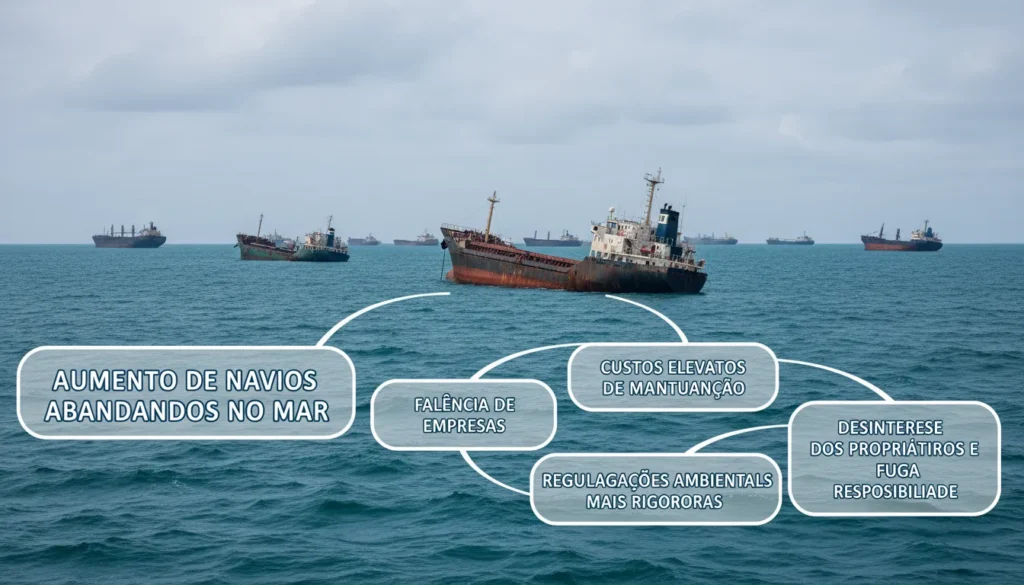

The number of commercial ships, particularly oil tankers, being abandoned by their owners has surged globally over the past year. This trend is largely attributed to geopolitical instability, which has led to disruptions in supply chains and fluctuating freight costs, causing financial strain on shipping companies.
In 2025, the number of abandoned ships reached 410, affecting over 6,223 merchant sailors, a significant increase from previous years. The International Transport Workers’ Federation (ITF) highlights that geopolitical tensions and the COVID-19 pandemic have exacerbated these issues. Many abandoned vessels are part of “ghost fleets,” which are often old, poorly maintained, and operate under flags of convenience to avoid strict regulations.
Crew members on these abandoned ships face dire conditions, including shortages of basic supplies like food and water. The ITF has intervened in several cases to ensure the provision of essentials and the payment of overdue wages. In one instance, a crew member named Ivan reported severe shortages on a tanker carrying Russian crude oil, which remains stranded in international waters near China.
Flags of convenience allow shipowners to register vessels in countries with lax regulatory oversight. This practice has been criticized for enabling ship abandonment and exposing crews to unsafe working conditions. In 2025, 82% of abandoned ships were registered under such flags. Countries like Panama, Liberia, and the Marshall Islands are common registries, but new players like Gambia have emerged, further complicating the issue.
Efforts to address ship abandonment include international cooperation to enforce maritime laws and protect seafarers. The ITF has recovered a significant portion of unpaid wages for affected sailors. However, the lack of a universally accepted definition of the shipowner’s responsibilities under maritime law remains a challenge.
Ivan, reflecting on his experience, expressed the need for greater caution in future employment, emphasizing the importance of verifying a ship’s legal status and conditions before signing contracts. The ongoing reliance on ghost fleets for transporting sanctioned goods underscores the need for stronger global regulatory frameworks to safeguard maritime workers.