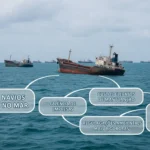
The phenomenon of ship abandonment, particularly involving oil tankers and commercial vessels, has seen a significant rise globally over the past year. This increase is largely attributed to geopolitical instability and the emergence of “ghost fleets.” These fleets consist of older, often poorly maintained ships with unclear ownership, which are sometimes used to circumvent international sanctions.
Geopolitical tensions have disrupted supply chains and increased freight costs, leading some shipping companies to struggle financially. The International Transport Workers’ Federation (ITF) reported a dramatic rise in abandoned ships, from 20 in 2016 to 410 in 2025, affecting over 6,000 seafarers. The instability has been exacerbated by the COVID-19 pandemic and conflicts in various regions.
Seafarers on abandoned ships face dire conditions, often lacking basic necessities like food and water. For instance, a Russian oil tanker left stranded outside Chinese territorial waters had its crew without pay for months. The ITF intervened to provide essential supplies and ensure payment of overdue wages.
Many abandoned ships operate under “flags of convenience,” registered in countries with lax regulatory oversight. This practice allows shipowners to evade stricter regulations and taxes. In 2025, 82% of abandoned vessels were registered under such flags. The lack of accountability often leaves crews vulnerable, as seen in the case of a ship falsely registered under the Gambian flag.
The ITF and other maritime organizations are advocating for stronger international cooperation to protect seafarers. Efforts include recovering unpaid wages and improving conditions aboard ships. The situation highlights the need for a genuine link between shipowners and the flags they sail under, as required by international maritime law.