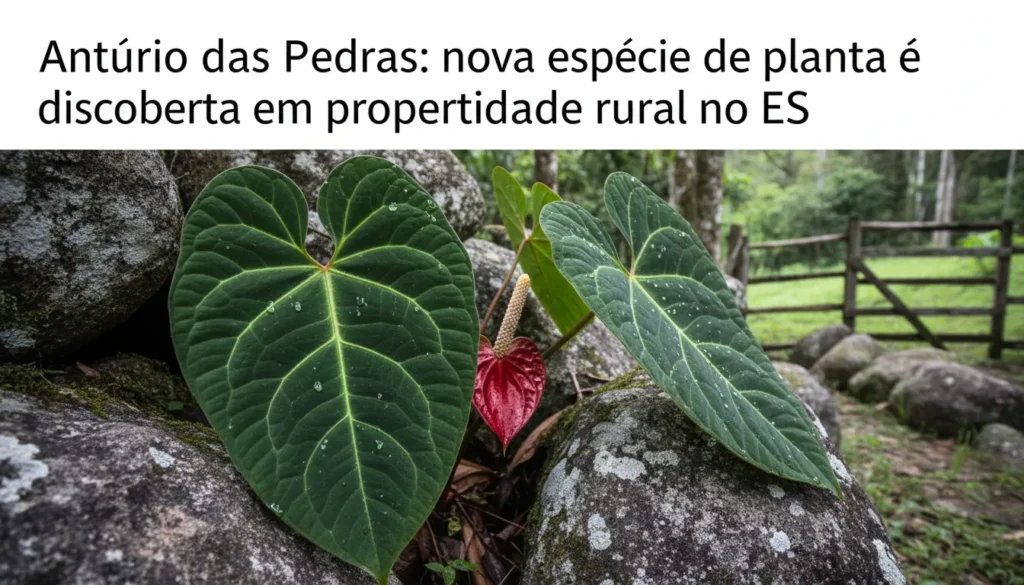

A new plant species, named the “Rock Anthurium,” has been discovered in the rural area of Linhares, located in the northern part of Espírito Santo, Brazil. This unique plant, scientifically known as anturium petraeum, thrives in rocky environments, which inspired its name. The discovery was made during a scientific expedition conducted by researchers from the Federal University of Espírito Santo (Ufes) and the Rio de Janeiro Botanical Garden. The expedition aimed to map endangered species and explore new plant varieties in the region.
The multidisciplinary team, led by botanist Ricardo Ribeiro, embarked on an expedition to Linhares, where they selected specific areas for their research. During the study, nearly 100 botanical samples were collected, including the Rock Anthurium, which was found growing on rocks and was previously unknown. The plant was discovered in 2022 on a rural property in the São Rafael district, and it took three years of study and comparison with similar species to confirm it as a new species.
In addition to the Rock Anthurium, other significant discoveries have been made in Espírito Santo. In Linhares, researchers monitoring the endangered chauá parrot uncovered a rare yellow ipe tree species at risk of extinction. This finding was documented in the international journal “Oryx – The International Journal of Conservation.” The study highlighted how observing one species can lead to the discovery of others, especially in areas impacted by environmental changes since the 2015 Mariana dam disaster.
Researchers from the National Institute of Atlantic Forest (INMA) also discovered a new bromeliad species in Nova Venécia, in the state’s northwest. Named “Scarlet Lady,” this plant, scientifically called Stigmatodon vinosus, was found in September 2024 and is critically endangered. The plant was located on an inselberg, an isolated rocky formation with unique biodiversity. The research is part of a project to inventory the flora of neglected rocky outcrops in Espírito Santo.