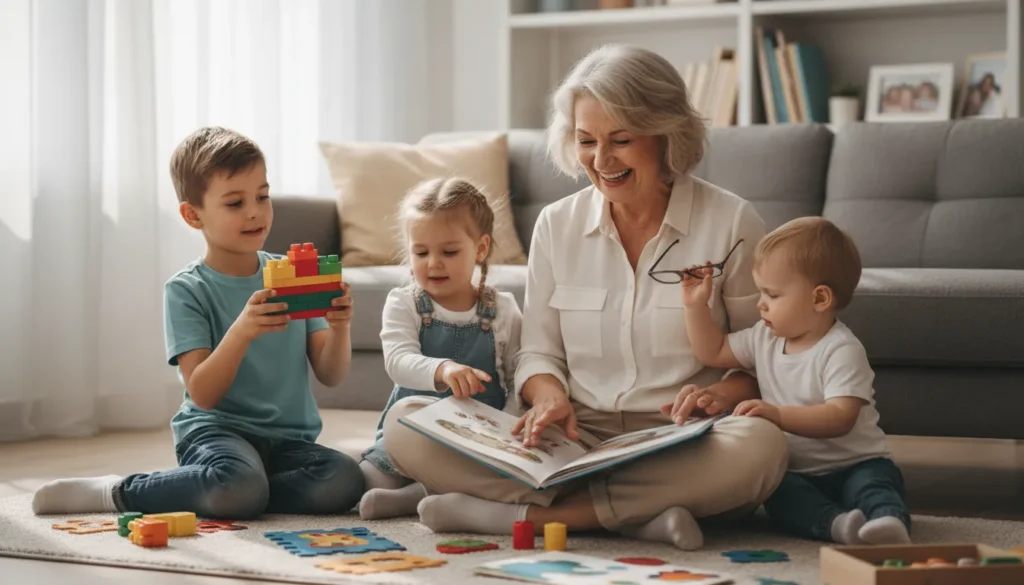

Recent research highlights the cognitive benefits for grandparents who actively engage with their grandchildren. A study published in the journal Psychology and Aging suggests that even minimal involvement in grandchildren’s lives can enhance memory and overall brain function in older adults.
The study examined data from nearly 2,900 grandparents over the age of 50, with an average age of 67, as part of the English Longitudinal Study of Ageing (ELSA). Between 2016 and 2022, it was observed that grandparents who participated in caregiving scored higher in memory and verbal fluency tests compared to those who did not. These findings were consistent regardless of age or health conditions.
It was found that the nature of the activities, rather than the amount of time spent, played a crucial role in cognitive improvement. Tasks that required active mental engagement, such as assisting with homework or playing games, were most beneficial. Additionally, grandparents with initially higher cognitive levels tended to engage in a wider range of activities.
The study also uncovered gender-specific trends. Grandmothers who provided care experienced a slower cognitive decline over time, whereas grandfathers, while still benefiting, did not show the same rate of deceleration. This difference may be attributed to grandmothers often taking on more structured caregiving roles.
The positive impact of grandparent involvement extends to grandchildren as well. Research from the University of Oxford and Boston College indicates that children with strong grandparental bonds exhibit fewer behavioral and emotional issues. In challenging situations like parental divorce or school bullying, grandparents serve as a stabilizing force, enhancing the resilience of their grandchildren.
