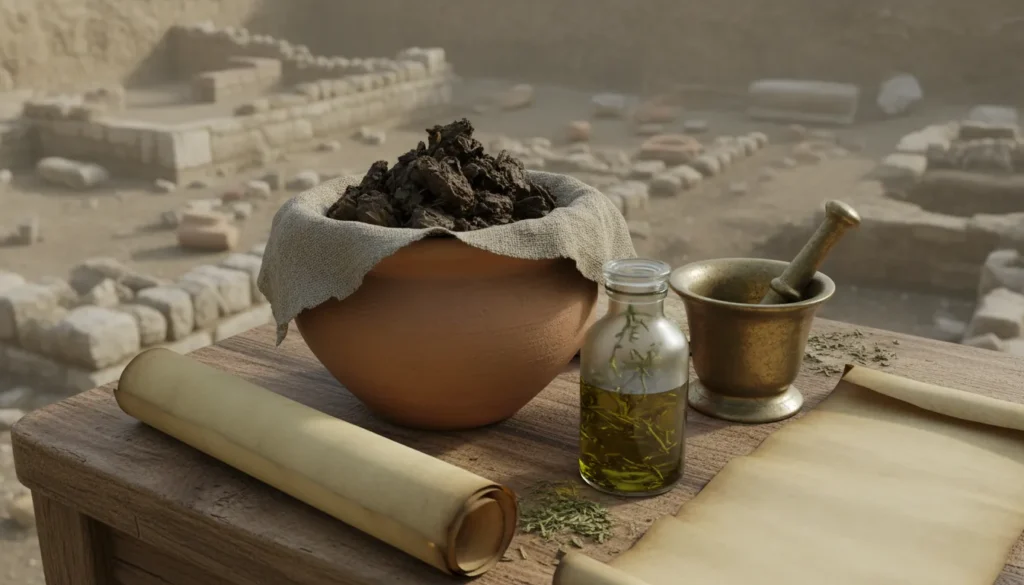

Researchers have uncovered compelling evidence that ancient Romans utilized human excrement and thyme oil for medicinal purposes. This revelation comes from the analysis of a nearly 2,000-year-old sealed vial found in Turkey, marking the first physical proof of a practice previously known only through ancient texts.
The discovery was made by a team of archaeologists who examined a small vial from the Museum of Bergama, near the ruins of Pergamon in Turkey. The museum houses numerous ancient containers used for oils and perfumes. Cenker Atila, an archaeologist from Sivas Cumhuriyet University, led the study, analyzing seven different vials, with one yielding conclusive results.
Chemical analysis revealed the vial contained a mixture of human feces and thyme oil. The vial, still sealed with ancient clay, was likely looted from a tomb, making its exact origin unclear. Atila noted the absence of any unpleasant odor upon opening the vial, which had been neglected until he initiated the analysis.
The study identified coprostanol and 24-ethylcoprostanol, biomarkers commonly found in the digestive tracts of animals that metabolize cholesterol, suggesting the feces were human. This aligns with historical texts by Galen, a prominent physician from Pergamon, who documented the use of feces in Greco-Roman medicine.
Pergamon, a Greek-origin city within the Roman Empire, was home to a renowned hospital and Galen himself. The design of the vial supports its regional origin. The Romans reportedly used fecal-based remedies for various ailments, from infections to reproductive disorders. To counteract the repulsive nature of these treatments, they were often mixed with pleasant-smelling substances like thyme oil.
This discovery provides the first direct evidence that such remedies were indeed applied in practice, corroborating ancient writings. The findings suggest these treatments were more than theoretical and were actively used in Roman medical practices.
