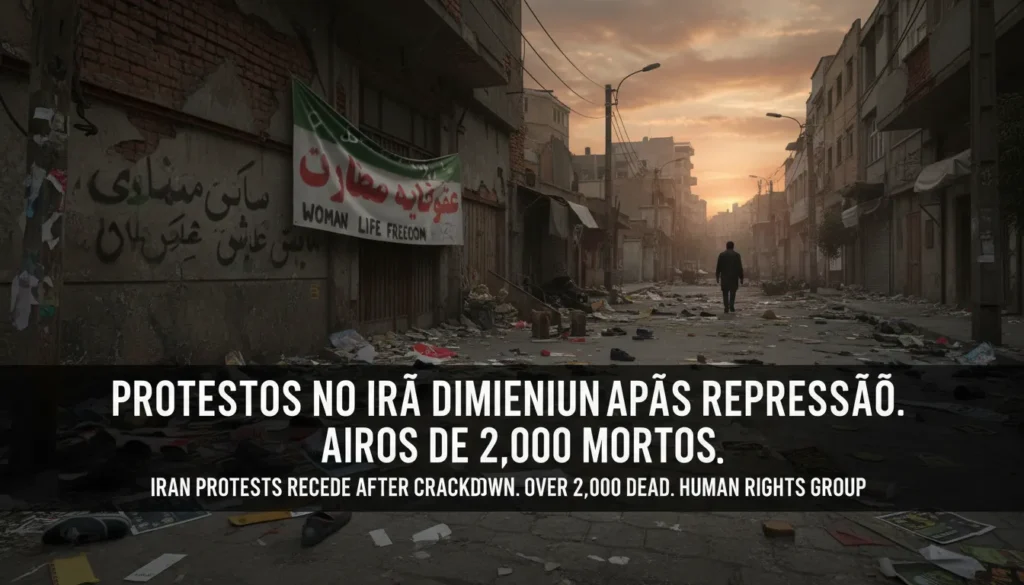

The recent wave of protests in Iran has significantly decreased following a severe crackdown by the government, which resulted in over 2,000 deaths, according to human rights organizations. The Human Rights Activists News Agency (HRANA), based in the United States, reported that the death toll has reached 2,677, including both protesters and government affiliates. This decline in protests comes amid threats of intervention from the United States, which has been closely monitoring the situation.
Amidst the unrest, the U.S. has been contemplating military actions, although the likelihood of such measures has lessened after President Donald Trump received reports of reduced fatalities. Despite this, the U.S. is expected to bolster its military presence in the region. Allies like Saudi Arabia and Qatar have engaged in diplomatic efforts with Washington, cautioning against military intervention due to potential regional repercussions. Meanwhile, Israel’s intelligence chief, David Barnea, visited the U.S. for discussions on Iran, with Israeli forces on high alert.
Reports from Tehran indicate a tense calm, with a strong security presence and drones patrolling the skies. The Iranian-Kurdish human rights group Hengaw noted the absence of protests since Sunday, though the security environment remains stringent. Sporadic unrest persists, with incidents such as the killing of a nurse during protests in Karaj. The Iranian government has accused foreign adversaries of instigating the unrest and has detained over 19,000 individuals, according to HRANA.
Russian President Vladimir Putin has engaged in talks with Israeli Prime Minister Benjamin Netanyahu and Iranian President Masoud Pezeshkian, expressing Russia’s willingness to mediate. Iranian authorities have blamed the U.S. and Israel for exacerbating the situation, alleging their involvement in arming protestors. The state media reported significant arrests, including leaders of recent disturbances in Kermanshah and individuals accused of vandalism in Kerman.